
Photo essay on Tucson, Arizona's annual Family Arts Festival.
read more | digg story
Tuesday, March 13, 2007


Monday, March 12, 2007
Sunday, March 11, 2007
Quick and Easy Cinnamon Flavored Coffee
Rather than paying extra for cinnamon flavored ground coffee, here is an easy way to make it yourself.
read more | digg story
read more | digg story
Sunday, March 04, 2007
Thursday, February 22, 2007
Fiesta de los Vacqueros Rodeo Parade

Today is Rodeo Day in Tucson, Arizona. An annual event since 1925, the day starts off with the Fiesta de los Vacqueros Parade which ends at the Rodeo grounds and heralds the start of Rodeo Week in the city.

For additional information and photos of this annual event please see my articles about the rodeo on HubPages, on this blog last year and at the IgoUgo travel site.
Friday, December 22, 2006
The Twelve Days of Christmas

On the first day of Christmas,
my true love sent to me
On the second day of Christmas,
my true love sent to me
And a partridge in a pear tree.
On the third day of Christmas,
my true love sent to me
Two turtle doves,
And a partridge in a pear tree.
On the fourth day of Christmas,
my true love sent to me
Three French hens,
Two turtle doves,
And a partridge in a pear tree.
On the fifth day of Christmas,
my true love sent to me
Four collie birds,
Three French hens,
Two turtle doves,
And a partridge in a pear tree.
On the sixth day of Christmas,
my true love sent to me
Five golden rings,
Four collie birds,
Three French hens,
Two turtle doves,
And a partridge in a pear tree.
On the seventh day of Christmas,
my true love sent to me
Six geese a-laying,
Five golden rings,
Four collie birds,
Three French hens,
Two turtle doves,
And a partridge in a pear tree.
On the eighth day of Christmas,
my true love sent to me
Seven swans a-swimming,
Six geese a-laying,
Five golden rings,
Four collie birds,
Three French hens,
Two turtle doves,
And a partridge in a pear tree.
On the ninth day of Christmas,
my true love sent to me
Eight maids a-milking,
Seven swans a-swimming,
Six geese a-laying,
Five golden rings,
Four collie birds,
Three French hens,
Two turtle doves,
And a partridge in a pear tree.
On the tenth day of Christmas,
my true love sent to me
Nine ladies dancing,
Eight maids a-milking,
Seven swans a-swimming,
Six geese a-laying,
Five golden rings,
Four collie birds,
Three French hens,
Two turtle doves,
And a partridge in a pear tree.
On the eleventh day of Christmas,
my true love sent to me
Ten lords a-leaping,
Nine ladies dancing,
Eight maids a-milking,
Seven swans a-swimming,
Six geese a-laying,
Five golden rings,
Four collie birds,
Three French hens,
Two turtle doves,
And a partridge in a pear tree.
On the twelfth day of Christmas,
my true love sent to me
Eleven pipers piping,
Ten lords a-leaping,
Nine ladies dancing,
Eight maids a-milking,
Seven swans a-swimming,
Six geese a-laying,
Five golden rings,
Four collie birds,
Three French hens,
Two turtle doves,
And a partridge in a pear tree!
Wednesday, December 20, 2006
A New Dial and These Twelve Days – Medieval Ballads
The words to the popular Christmas carol, The Twelve Days of Christmas, while clever and interesting, don't make a lot of sense to many people. One of the reasons they don't make sense to many people is that the carol originated in the middle ages and is thus at least five or six hundred years old if not older. Since language changes over time many of the words in the song, while still common and in use today, don't have the same meaning today as in the past. For instance, the five golden rings refer to five ring necked pheasants (who have a golden ring of feathers on their necks) and not to five pieces of golden jewelry to be worn on ones fingers.
Because of changes in language and the symbolism in the gifts, many people have concluded that the gifts in the song are really codes for religious symbols. This theory has been put forward most strongly by a Roman Catholic priest by the name of Father Hal Stockert who, as a result of some discoveries made while doing research on an unrelated topic, advanced the hypothesis that the words were a code used by Catholic parents in England during the fifteenth and sixteenth centuries, when the practice of the Catholic religion in England was outlawed. Many people have overlooked the fact that Fr. Stockert advanced this as a hypothesis and suggested that it would be a good topic for someone else to research and prove or disprove, and have, instead, accepted the hypothesis as a proven historical fact.
While I feel that the Twelve Days of Christmas, as it has come down to us, is a secular carol it may have evolved from an earlier religious song or songs. Two old French songs, A New Dial and These Twelve Days have the same structure as the Twelve Days of Christmas and both are religious in nature. It could be that this type of ballad, with repeating verses as one progresses through it, was popular and The Twelve Days of Christmas was put together using the same format but independent of these two songs or, over time people could have begun substituting secular symbols for the religious ones and sung the song while partying. Reading the three songs, it is clear that words and images in the The Twelve Days of Christmas are more suited for a party while the words and images in A New Dial and These Twelve Days are more suited for helping children, and possibly adults, memorize basic religious truths.
It is important to remember that all of these songs were popular ballads which were passed around and sung with people often improvising. They were not printed, copyrighted and distributed like published works are today so it is not unusual for there to be multiple variations of a song or multiple songs that are similar in many respects. The versions we have today are those that were written down and published after the invention of the movable type printing press by Gutenberg in the mid-fifteenth century. With the Internet we can expect to see more copies of old versions of these songs as old books are digitized and published on the Internet and older letters, diaries and other unpublished written works from prior to Gutenberg's invention are digitized and published on the Internet.
A New Dial*
What are they that are but one?
We have one God alone
In heaven above sits on His throne.
What are they which are by two?
Two testaments, the old and new,
We do acknowledge to be true.
What are they which are but three?
Three persons in the Trinity
Which make one God in unity.
What are they which are but four
Four sweet Evangelists there are,
Christ's birth, life, death which do declare.
What are they which are but five?
Five senses, like five kings, maintain
In every man a several reign.
What are they which are but six?
Six days to labor is not wrong,
For God himself did work so long.
What are they which are but seven?
Seven liberal arts hath God sent down
With divine skill man's soul to crown.
What are they which are but eight?
Eight Beatitudes are there given
Use them right and go to heaven.
What are they which are but nine?
Nine Muses, like the heaven's nine spheres,
With sacred tunes entice our ears.
What are they which are but ten?
Ten statutes God to Moses gave
Which, kept or broke, do spill or save.
What are they which are but eleven?
Eleven thousand virgins did partake
And suffered death for Jesus' sake.
What are they which are but twelve?
Twelve are attending on God's son;
Twelve make our creed. The Dial's done.
* Lyrics Source: http://www.new-life.net/chrtms18.htm
In Those Twelve Days**
Chorus
In those twelve days, and in those twelve days, let us be glad,
For God of his power hath all things made.
What is that which is but one?
What is that which is but one?
We have but one God alone
In Heaven above sits on his throne.
Chorus
What are they which are but two?
What are they which are but two?
Two Testaments, as we are told,
The one is New and the other Old.
Chorus
What are they that are but three?
What are they that are but three?
Three persons in the Trinity,
The Father, Son, and Ghost Holy.
Chorus
What are they that are but four?
What are they that are but four?
Four Gospels written true,
John, Luke, Mark, and Matthew.
Chorus
What are they that are but five?
What are they that are but five?
Five senses we have to tell,
God grant us grace to use them well.
Chorus
What are they that are but six?
What are they that are but six?
Six ages this world shall last,
Five of them are gone and past.
Chorus
What are they that are but seven?
What are they that are but seven?
Seven days in the week have we,
Six to work and the seventh holy.
Chorus
What are they that are but eight?
What are they that are but eight?
Eight beatitudes are given,
Use them well and go to Heaven.
Chorus
What are they that are but nine?
What are they that are but nine?
Nine degrees of Angels high
Which praise God continually.
Chorus
What are they that are but ten?
What are they that are but ten?
Ten Commandments God hath given,
Keep them right and go to Heaven.
Chorus
What are they that are but eleven?
What are they that are but eleven?
Eleven thousand virgins did partake
And suffered death for Jesus' sake.
Chorus
What are they that are but twelve?
What are they that are but twelve?
Twelve Apostles Christ did chuse
To preach the Gospel to the Jews.
Chorus
**Source: The Hymns and Carols of Christmas
Sunday, October 22, 2006
Halloween and Related Holidays
This season has 3 holidays that follow one after the other, starting with Halloween on October 31st, and ending with All Souls Day on November 2nd. In the U.S. Halloween is the most famous of the 3 days. The name Halloween means All Hallows Eve because it is the evening or night before All Hollows, or as it is now called, All Saints Day. In Scotland, the word for evening is e'en which, when preceded by hallow, gives us hallowe'en or Halloween.
The ancient Celtic religious festival of Samhain (pronounced sow-in) began on October 31st. This festival marked the end of summer, the end of harvest and the beginning of winter with its long dark nights and short days. Because the Celts, like many ancient peoples, measured the day as going from sunset to sunset, the Samhain holiday began at sunset on October 31st.
Samhain marked a turning point in the Celtic year and as the world symbolically transitioned from summer to winter on this day, the normal rules of daily life were relaxed. It was also a day when the barrier between our world and the spirit world was temporarily opened, allowing spirits easy access to the physical world. With spirits of the dead abroad in the world on the night Hallowe'en, people started dressing in costumes to both scare the spirits away and to be unrecognized by the dead spirits. The Jack O' Lantern evolved from an Irish tale about a man named Stingy Jack who managed to anger both God and Satan and was barred from both Heaven and Hell upon his death. When Jack attempted to enter Hell after his death, the Devil turned him away and condemed him to wander the earth at night with only a burning coal to light his way. Jack carried the coal in a hollow turnip. When the Irish came to America in the 19th century, they switched from turnips to pumpkins to make Jack O' Lanterns.
Like Christmas, Halloween began as a pagan festival that later converted to a Christian holiday and in recent times evolved into a combination secular and Christian holiday. But despite the presence of assorted spirits, including devils, in the Halloween tradition, Halloween has never been historically associated with devil worship. The ancient Celtic religion did not include evil satanic worship and at no point in it's history has devil worship played a part in the Halloween tradition. Any connections to devil worship are modern attempts by people of this persuasion to take over this holiday.
The second of the three days is All Saints Day. This is the day that the Church has set aside to honor all the saints in the Church both known and unknown.
In the early Church it was common for local churches to celebrate the anniversary of the martyrdom of their members who had died for their faith. As early as 411 A.D. many churches in what is now the Middle East began Designating the first Friday after Easter as the general feast day for all martyrs.
In the 8th century, Pope Gregory III (731-741) consecrated a chapel in St. Peter's Basilica to all the saints (honoring all those who died and gone to Heaven, not just those who had been martyred) and established November 1st as the day of the feast. This coincided with the Celtic festival of Samhain and gave the festival a more Christian focus thereby absorbing it into the Christian tradition.
Today, All Saints Day is a major feast day in the Roman Catholic Church and some other Christian churches in the West and is celebrated on November 1st. In the Orthodox churches in the East, All Saints Day is observed as the first Sunday after Pentecost, thereby remaining in May.
The third day is All Souls Day, another religious holiday. This is the day the Catholic Church sets aside to pray for the deceased who are in Purgatory awaiting entry into Heaven. It is celebrated on November 2nd immediately following All Saints Day. Odilo, abbot of clunny in the eleventh century is generally credited with establishing All Souls Day as a common feast day for the Church as a whole.
In Mexico (and now parts of the southwestern U.S. with a large Mexican population) All Souls Day is known as Dia de los Muertos or "Day of the Dead". The date tends to vary some by area, but Dia de los Muertos is observed as the same time as Halloween, All Saints Day and All Souls Day.
Dia de los Muertos is the old Aztec holiday set aside to honor the dead. When the Spanish arrived in Mexico and Central America, they tried to eradicate the holiday as part of their efforts to convert the local population to Christianity. But when that failed, they moved the holiday to coincide with All Souls Day and changed the focus from pagan to Christian while keeping many of the traditions and customs of the old Aztec holiday.
The ancient Celtic religious festival of Samhain (pronounced sow-in) began on October 31st. This festival marked the end of summer, the end of harvest and the beginning of winter with its long dark nights and short days. Because the Celts, like many ancient peoples, measured the day as going from sunset to sunset, the Samhain holiday began at sunset on October 31st.
Samhain marked a turning point in the Celtic year and as the world symbolically transitioned from summer to winter on this day, the normal rules of daily life were relaxed. It was also a day when the barrier between our world and the spirit world was temporarily opened, allowing spirits easy access to the physical world. With spirits of the dead abroad in the world on the night Hallowe'en, people started dressing in costumes to both scare the spirits away and to be unrecognized by the dead spirits. The Jack O' Lantern evolved from an Irish tale about a man named Stingy Jack who managed to anger both God and Satan and was barred from both Heaven and Hell upon his death. When Jack attempted to enter Hell after his death, the Devil turned him away and condemed him to wander the earth at night with only a burning coal to light his way. Jack carried the coal in a hollow turnip. When the Irish came to America in the 19th century, they switched from turnips to pumpkins to make Jack O' Lanterns.
Like Christmas, Halloween began as a pagan festival that later converted to a Christian holiday and in recent times evolved into a combination secular and Christian holiday. But despite the presence of assorted spirits, including devils, in the Halloween tradition, Halloween has never been historically associated with devil worship. The ancient Celtic religion did not include evil satanic worship and at no point in it's history has devil worship played a part in the Halloween tradition. Any connections to devil worship are modern attempts by people of this persuasion to take over this holiday.
The second of the three days is All Saints Day. This is the day that the Church has set aside to honor all the saints in the Church both known and unknown.
In the early Church it was common for local churches to celebrate the anniversary of the martyrdom of their members who had died for their faith. As early as 411 A.D. many churches in what is now the Middle East began Designating the first Friday after Easter as the general feast day for all martyrs.
In the 8th century, Pope Gregory III (731-741) consecrated a chapel in St. Peter's Basilica to all the saints (honoring all those who died and gone to Heaven, not just those who had been martyred) and established November 1st as the day of the feast. This coincided with the Celtic festival of Samhain and gave the festival a more Christian focus thereby absorbing it into the Christian tradition.
Today, All Saints Day is a major feast day in the Roman Catholic Church and some other Christian churches in the West and is celebrated on November 1st. In the Orthodox churches in the East, All Saints Day is observed as the first Sunday after Pentecost, thereby remaining in May.
The third day is All Souls Day, another religious holiday. This is the day the Catholic Church sets aside to pray for the deceased who are in Purgatory awaiting entry into Heaven. It is celebrated on November 2nd immediately following All Saints Day. Odilo, abbot of clunny in the eleventh century is generally credited with establishing All Souls Day as a common feast day for the Church as a whole.
In Mexico (and now parts of the southwestern U.S. with a large Mexican population) All Souls Day is known as Dia de los Muertos or "Day of the Dead". The date tends to vary some by area, but Dia de los Muertos is observed as the same time as Halloween, All Saints Day and All Souls Day.
Dia de los Muertos is the old Aztec holiday set aside to honor the dead. When the Spanish arrived in Mexico and Central America, they tried to eradicate the holiday as part of their efforts to convert the local population to Christianity. But when that failed, they moved the holiday to coincide with All Souls Day and changed the focus from pagan to Christian while keeping many of the traditions and customs of the old Aztec holiday.
Friday, September 22, 2006
Autumn Arrives
Summer is fading. The days are getting shorter and the weather cooler. Crops are being harvested and birds are getting ready to migrate south. In the Northern half of the earth winter is coming. Meanwhile, in the Southern half of the earth the days are getting shorter and the weather warmer. Farmers are getting ready to plant and birds will soon be arriving from the north. In New England and other parts of the country the countryside is about to burst into color as leaves change from their summer green to the reds, yellows and oranges of Fall providing a spectacular end to summer.
As the earth continues its never ending journey around the sun, the twenty-three plus degree tilt of its axis causes it to appear that the sun, over the course of the year, moves from north to south and vice versa. During half of the year the sun's rays are concentrated more on the Northern Hemisphere than the Southern Hemisphere and then it reverses and shines more on the Southern than the Northern Hemisphere. It is this apparent movement of the sun from north to south and back which gives us our ever changing seasons. It is also how we determine the official change from one season to another.
As I write this, a transition is about to take place. Later today the sun will be passing over the Earth's Equator and giving us one of the two days each year in which night and day are approximately equal. These two days are the known as the Equinox which is Latin for equal. In the days before the Internet the Equinox had the same name for both the writer and his audience. If I were writing this for the local newspaper I would simply state that the Autumnal (from the Latin word autumnus which means autumn), or Autumn, Equinox will be occurring tomorrow, September 22, 2006 and the season of Autumn or Fall as we North Americans tend to call it, will officially begin. However, for those in the Southern Hemisphere, it will be the Vernal (from the Latin word ver which means spring) or Spring Equinox and will signal the official start of Spring in that part of the world. The same is true for the date of the first day of Autumn/Spring. Here in western United States the sun will officially cross the Equator at 9:03 p.m. on Friday September 22, 2006. However, on the East Coast of the United States this event will occur at 12:03 a.m. on Saturday September 23, 2006. Therefore, in the western half of the world the equinox will occur on September 22nd while in the eastern half of the world the equinox will occur at the same time but, according to their clocks, it will be Saturday September 23, 2006. Meanwhile, for the southern half of the world the equinox will be the Vernal or Spring Equinox heralding the start of Spring while in the northern half of the world the event will be the Autumnal or Autumn Equinox heralding the start of Autumn.
This exercise will be repeated on March 20th or 21st of 2007 (date varies depending upon geographic location), except on that date it will be the Spring Equinox and the start of spring for the Northern Hemisphere and the Autumn Equinox and the start of Autumn for the Southern Hemisphere.
As the earth continues its never ending journey around the sun, the twenty-three plus degree tilt of its axis causes it to appear that the sun, over the course of the year, moves from north to south and vice versa. During half of the year the sun's rays are concentrated more on the Northern Hemisphere than the Southern Hemisphere and then it reverses and shines more on the Southern than the Northern Hemisphere. It is this apparent movement of the sun from north to south and back which gives us our ever changing seasons. It is also how we determine the official change from one season to another.
As I write this, a transition is about to take place. Later today the sun will be passing over the Earth's Equator and giving us one of the two days each year in which night and day are approximately equal. These two days are the known as the Equinox which is Latin for equal. In the days before the Internet the Equinox had the same name for both the writer and his audience. If I were writing this for the local newspaper I would simply state that the Autumnal (from the Latin word autumnus which means autumn), or Autumn, Equinox will be occurring tomorrow, September 22, 2006 and the season of Autumn or Fall as we North Americans tend to call it, will officially begin. However, for those in the Southern Hemisphere, it will be the Vernal (from the Latin word ver which means spring) or Spring Equinox and will signal the official start of Spring in that part of the world. The same is true for the date of the first day of Autumn/Spring. Here in western United States the sun will officially cross the Equator at 9:03 p.m. on Friday September 22, 2006. However, on the East Coast of the United States this event will occur at 12:03 a.m. on Saturday September 23, 2006. Therefore, in the western half of the world the equinox will occur on September 22nd while in the eastern half of the world the equinox will occur at the same time but, according to their clocks, it will be Saturday September 23, 2006. Meanwhile, for the southern half of the world the equinox will be the Vernal or Spring Equinox heralding the start of Spring while in the northern half of the world the event will be the Autumnal or Autumn Equinox heralding the start of Autumn.
This exercise will be repeated on March 20th or 21st of 2007 (date varies depending upon geographic location), except on that date it will be the Spring Equinox and the start of spring for the Northern Hemisphere and the Autumn Equinox and the start of Autumn for the Southern Hemisphere.
Thursday, September 21, 2006
First Annual One Web Day - Friday September 22, 2006
Friday September 22, 2006 is the first annual One Web Day celebration. At least that is the goal of an outfit that calls itself OneWebDay and is busy spreading the word via its web page (where else would such an organization choose to announce its presence) whose URL is www.onewebday.org.
Unlike the other holidays I write about here, this is a brand new holiday. So new, that the first time it will be celebrated will be tomorrow, Friday September 22, 2006. As of now there is very little history and no real traditions to report on. Instead, this is an attempt to use the Internet to quickly spread and idea and just as quickly build momentum to have people spontaneously begin celebrating it as a holiday. The organizers of the event have deliberately chosen not to dictate much beyond the date, September 22nd every year, and the general purpose which is to celebrate the role of the Internet on our lives. Beyond this it is up the the users of the Internet to determine how it is to be celebrated and what values it will celebrate.
Of course, this is the way all of our holidays started. Some event had such an impact that it stuck in people's memories and some began making a point of memorializing the date as it occurred each year. Others eventually joined in and, over time, traditions intermixed and out of this mixture some common traditions emerged. The only real difference with OneWebDay is the attempt to start the holiday off with a major world wide celebration. According to the website of the OneWebDay organizers (www.onewebday.org) numerous groups have sprung up around the world to help promote and celebrate the day. Assuming the idea of a special day to celebrate the Internet finds appeal among rank and file users, rather than just those of us who are deeply involved with the Internet, the holiday may take off and quickly become a holiday celebrated by all (including the few who don't use the Internet). However, even if it just becomes a day to be celebrated by those whose lives are intertwined with the Internet, it could still evolve into a widespread and popular holiday - it will just take longer.
According to their website, the idea for OneWebDay originated with Susan Crawford, a professor at the Cardozo School of Law and who is also a member of the Board of Directors of ICANN (Internet Corporation for Assigned Names and Numbers), the organization that is responsible for managing the assignment of internet addresses. Ms Crawford used Earth Day as the model for the holiday. The September 22nd date was chosen for two reasons. First, because it fell after school started in the Northern Hemisphere (and school is probably still in session in the Southern Hemisphere although I do not know if that was checked or considered) thereby enabeling schools to promote it among their students. Second, the choice of the 22nd corresponds with Earth Day which is celebrated on April 22nd. Finally, according to the OneWebDay website, the general purpose of the holiday is to celebrate the impact of the Internet on our lives. Beyond this, the rest of the details of OneWebDay are being left to the masses in cyberspace to decide. This is a bottom up celebration with the users of the Internet defining the purpose of the holiday and how to celebrate it.
So, we will see how it goes and, if the holiday is a hit this year, then next year I will be able to begin reporting on how the holiday is celebrated. But, for now, you have the history and traditions of this proposed holiday as they stand on the eve the first OneWebDay.
rel=”tag”>onewebday
Unlike the other holidays I write about here, this is a brand new holiday. So new, that the first time it will be celebrated will be tomorrow, Friday September 22, 2006. As of now there is very little history and no real traditions to report on. Instead, this is an attempt to use the Internet to quickly spread and idea and just as quickly build momentum to have people spontaneously begin celebrating it as a holiday. The organizers of the event have deliberately chosen not to dictate much beyond the date, September 22nd every year, and the general purpose which is to celebrate the role of the Internet on our lives. Beyond this it is up the the users of the Internet to determine how it is to be celebrated and what values it will celebrate.
Of course, this is the way all of our holidays started. Some event had such an impact that it stuck in people's memories and some began making a point of memorializing the date as it occurred each year. Others eventually joined in and, over time, traditions intermixed and out of this mixture some common traditions emerged. The only real difference with OneWebDay is the attempt to start the holiday off with a major world wide celebration. According to the website of the OneWebDay organizers (www.onewebday.org) numerous groups have sprung up around the world to help promote and celebrate the day. Assuming the idea of a special day to celebrate the Internet finds appeal among rank and file users, rather than just those of us who are deeply involved with the Internet, the holiday may take off and quickly become a holiday celebrated by all (including the few who don't use the Internet). However, even if it just becomes a day to be celebrated by those whose lives are intertwined with the Internet, it could still evolve into a widespread and popular holiday - it will just take longer.
According to their website, the idea for OneWebDay originated with Susan Crawford, a professor at the Cardozo School of Law and who is also a member of the Board of Directors of ICANN (Internet Corporation for Assigned Names and Numbers), the organization that is responsible for managing the assignment of internet addresses. Ms Crawford used Earth Day as the model for the holiday. The September 22nd date was chosen for two reasons. First, because it fell after school started in the Northern Hemisphere (and school is probably still in session in the Southern Hemisphere although I do not know if that was checked or considered) thereby enabeling schools to promote it among their students. Second, the choice of the 22nd corresponds with Earth Day which is celebrated on April 22nd. Finally, according to the OneWebDay website, the general purpose of the holiday is to celebrate the impact of the Internet on our lives. Beyond this, the rest of the details of OneWebDay are being left to the masses in cyberspace to decide. This is a bottom up celebration with the users of the Internet defining the purpose of the holiday and how to celebrate it.
So, we will see how it goes and, if the holiday is a hit this year, then next year I will be able to begin reporting on how the holiday is celebrated. But, for now, you have the history and traditions of this proposed holiday as they stand on the eve the first OneWebDay.
rel=”tag”>onewebday
Friday, September 08, 2006
The Genundowa Autumn Light Festival on Canandaigua Lake
by Chuck
by Chuck
Canandaigua Lake lies nestled in the hills of Western New York State. It is the western most of the five Finger Lakes that stretch part way between Lake Ontario and the Pennsylvania border in Western New York. When I was growing up, the five largest lakes - Canandaigua, Keuka, Seneca, Cayuga and Skaneateles - were known as the Finger Lakes despite the fact that there were other, smaller, slender lakes with a north - south orientation, in the vicinity. Today, I believe all of the lakes are called Finger Lakes.
While cience teachers in school described how these lakes were carved out by ancient glaciers, the local lore had it that, according to local Indian tradition, the lakes had been created at the beginning of time when the Great Spirit spread his fingers wide and left his palm print on the landscape with the five largest lakes being the imprint of his five fingers. Home of the five (later six when the Tuscora tribe joined,) nation confederation of Indian tribes - Seneca, Oneida, Onondaga, Oneida and Mohawk - the land is packed with history and legend.
As the land changed hands from Indians who hunted and farmed the land, to white settlers who cleared the land for farms to urban dwellers who circled the lakes with summer cottages, some of the legends and traditions survived and have been handed down from generation to generation. One of these traditions that had long been celebrated along Canandaigua Lake is the Seneca tribe's Autumn Festival of Lights Ceremony. Each year at the end of summer following the harvesting of the crops, the tribe held a celebration of Thanksgiving.
One part of the celebration involved lighting a large fire on top of Bare Hill after the sun had set and darkness enveloped the land. Bare Hill, which is shrouded in Seneca legend and tradition, is located on the east side of Canandaigua Lake. The Seneca village of Genundowa was located near Bare Hill and the lighting of the fire atop the hill was the responsibility of the village's tribal elders and Keepers of the Light. The large fire on Bare Hill could be seen from all around the lake and the lighting of this fire was a signal for villages around the lake to light their own, smaller fires, along the shores. Within minutes of the lighting of the fire on Bare Hill the lake was ringed with fires. The fires represented both a message of Thanksgiving to God for a good harvest as well as a ceremonial bonding of all of the native villages that ringed the lake.
Following the end of the American Revolution, settlers began to move into the area of Western New York and many of the Seneca moved to lands reserved for them in the 1794 Pickering Treaty which was signed on the site where the Ontario County Courthouse now stands in the City of Canandaigua. Among the traditions that stayed behind as the lands changed hands was the festival of lights. Over the years new variations entered. With the ringing of the lake with summer cottages in the early twentieth century, the festival became more of an end of summer recreation commemoration than a thanksgiving for a good harvest. My great aunt and uncle had a cottage on the east side of the lake near Bare Hill. During the 1960s, while growing up, we spent many Saturdays visiting them at their cottage. By that time phosphorous flares, the type that are commonly used for highway emergencies, had replaced individual fires and the festival was set for the Saturday of Labor Day weekend. I believe that even then, the event started with the lighting of a fire on Bare Hill. As children we would help my Father and Uncle place about a half dozen flares along the front yard facing the lake. At least one was always placed on the end of my Uncle's small wooden pier that extended into the lake. The fire on Bare Hill could not be seen from my Uncle's cottage but there was a specific time, honored by almost everyone along the lake, and when that time arrived you could see flares starting to be lit on both sides of the lake. My Uncle and my Father would light our flares and within a couple of minutes the entire lake would be ringed with red flares burning brightly. For the next five to ten minutes all eyes were on the sight of the red ring surrounding the lake and for those few minutes, just as the ancient Seneca had been linked by fire, the modern cottage dwellers were momentarily linked by the common fire both with the past and in community with their neighbors.
Today, my Aunt and Uncle have passed on, the cottage sold years ago and I live on the other side of the country and rarely visit the lake. But the tradition continues. Today the fire on Bare Hill is now lit by representatives of the Seneca nation and a new generation of cottage (now mostly year round residences) dwellers partakes in lining their lake front with flares which are lit following the lighting of the fire on Bare Hill. For a few minutes time stands still as the ancient Seneca festival is once again celebrated by those who dwell along the shores of this beautiful lake.
While cience teachers in school described how these lakes were carved out by ancient glaciers, the local lore had it that, according to local Indian tradition, the lakes had been created at the beginning of time when the Great Spirit spread his fingers wide and left his palm print on the landscape with the five largest lakes being the imprint of his five fingers. Home of the five (later six when the Tuscora tribe joined,) nation confederation of Indian tribes - Seneca, Oneida, Onondaga, Oneida and Mohawk - the land is packed with history and legend.
As the land changed hands from Indians who hunted and farmed the land, to white settlers who cleared the land for farms to urban dwellers who circled the lakes with summer cottages, some of the legends and traditions survived and have been handed down from generation to generation. One of these traditions that had long been celebrated along Canandaigua Lake is the Seneca tribe's Autumn Festival of Lights Ceremony. Each year at the end of summer following the harvesting of the crops, the tribe held a celebration of Thanksgiving.
One part of the celebration involved lighting a large fire on top of Bare Hill after the sun had set and darkness enveloped the land. Bare Hill, which is shrouded in Seneca legend and tradition, is located on the east side of Canandaigua Lake. The Seneca village of Genundowa was located near Bare Hill and the lighting of the fire atop the hill was the responsibility of the village's tribal elders and Keepers of the Light. The large fire on Bare Hill could be seen from all around the lake and the lighting of this fire was a signal for villages around the lake to light their own, smaller fires, along the shores. Within minutes of the lighting of the fire on Bare Hill the lake was ringed with fires. The fires represented both a message of Thanksgiving to God for a good harvest as well as a ceremonial bonding of all of the native villages that ringed the lake.
Following the end of the American Revolution, settlers began to move into the area of Western New York and many of the Seneca moved to lands reserved for them in the 1794 Pickering Treaty which was signed on the site where the Ontario County Courthouse now stands in the City of Canandaigua. Among the traditions that stayed behind as the lands changed hands was the festival of lights. Over the years new variations entered. With the ringing of the lake with summer cottages in the early twentieth century, the festival became more of an end of summer recreation commemoration than a thanksgiving for a good harvest. My great aunt and uncle had a cottage on the east side of the lake near Bare Hill. During the 1960s, while growing up, we spent many Saturdays visiting them at their cottage. By that time phosphorous flares, the type that are commonly used for highway emergencies, had replaced individual fires and the festival was set for the Saturday of Labor Day weekend. I believe that even then, the event started with the lighting of a fire on Bare Hill. As children we would help my Father and Uncle place about a half dozen flares along the front yard facing the lake. At least one was always placed on the end of my Uncle's small wooden pier that extended into the lake. The fire on Bare Hill could not be seen from my Uncle's cottage but there was a specific time, honored by almost everyone along the lake, and when that time arrived you could see flares starting to be lit on both sides of the lake. My Uncle and my Father would light our flares and within a couple of minutes the entire lake would be ringed with red flares burning brightly. For the next five to ten minutes all eyes were on the sight of the red ring surrounding the lake and for those few minutes, just as the ancient Seneca had been linked by fire, the modern cottage dwellers were momentarily linked by the common fire both with the past and in community with their neighbors.
Today, my Aunt and Uncle have passed on, the cottage sold years ago and I live on the other side of the country and rarely visit the lake. But the tradition continues. Today the fire on Bare Hill is now lit by representatives of the Seneca nation and a new generation of cottage (now mostly year round residences) dwellers partakes in lining their lake front with flares which are lit following the lighting of the fire on Bare Hill. For a few minutes time stands still as the ancient Seneca festival is once again celebrated by those who dwell along the shores of this beautiful lake.
Wednesday, August 23, 2006
Make Your Life Easier With Online Banking
The term "bankers hours" is seldom heard these days, and with good reason. Gone are the days when banks were open from 9 - 3 Monday through Thursday and 9 - 6 on Fridays. Thanks to online banking, banking services are available 24/7. Today practically every banking transaction except making a cash deposit or accessing your safe deposit box can be done online. But with ATM machines even cash (other than coins) and check deposits can be made 24/7 via an ATM machine.
The name of the game here is service and security. We want to be able to access bank services quickly and easily and make sure that our money is safe. Ironically, despite all the Internet scams we read about where people lose money, studies have shown that people who use online banking regularly have fewer losses than those who do their banking the traditional way. The reason is that people who use online banking generally access their accounts online many times a month and can quickly spot when something is wrong. While those who engage in traditional banking have to wait until they receive their statement at the end of the month to see if anything is amiss.
Like services from traditional brick and mortar banks, the services from online banking operations vary in price and quality. However, with online banking you literally have every bank in the nation competing for your business, so you can shop around to find the bank that offers the types of services you want and the quality of service you want either for free or a low price. For instance, my main bank is a totally online and mail operation. They offer excellent service and most of their services are free (free interest bearing checking accounts, free bill pay, free savings accounts, etc.). I can not only move money between accounts at that bank but can move it between other banks that I do business with. To handle things like checks I receive in the mail and my wife's pay check, which is still hand written by her employer, I maintain an account with a neighborhood credit union. Checks are deposited into the credit union ATM and the funds are then moved, via the Internet, to my main bank. We also have the children's accounts at the credit union and have received some good deals on loans from them as well.
Being online, I can access my accounts from anywhere. I also have my paycheck automatically deposited to my checking account. Even when I am traveling out of state or out of the country on pay day, I still have immediate access to my pay check from wherever I am and, using the bank's bill pay service, I can sit down in my hotel room and pay my bills on the spot rather than waiting until I get home and risk a late fee.
However, I have discovered that "online" means different things to different banks. A couple of months ago my wife and I stopped by a couple of car dealerships on a Saturday morning window shopping for a car for our daughter. We found a nice one but did not want to do the financing through the dealer. I drove home, went online with my main bank, filled out an application and received an approval all within about 30 minutes. I printed the approval which stated that I had the loan contingent upon my actually purchasing the car and confirming to the dealership that a check would be FedExed to them on Monday. I picked up my daughter on her lunch break and she had her car before she returned to work. Then a couple of weeks ago I went online with my credit union on a Sunday evening, filled out an application for a Visa card for my wife and I, and submitted it. On Monday evening there was a message on my phone to call the credit union, which I did on Tuesday and was informed that the card had been approved but that my wife and I would have to come in and sign the application. When we arrived we discovered that "signing" the application meant giving a loan officer all the information I had previously submitted on line. He dutifully typed it into the computer, printed it out and we signed it. An hour and a half later we left with the assurance that the cards would be mailed to us shortly. Obviously, some banks have put more thought into their systems than others.
The name of the game here is service and security. We want to be able to access bank services quickly and easily and make sure that our money is safe. Ironically, despite all the Internet scams we read about where people lose money, studies have shown that people who use online banking regularly have fewer losses than those who do their banking the traditional way. The reason is that people who use online banking generally access their accounts online many times a month and can quickly spot when something is wrong. While those who engage in traditional banking have to wait until they receive their statement at the end of the month to see if anything is amiss.
Like services from traditional brick and mortar banks, the services from online banking operations vary in price and quality. However, with online banking you literally have every bank in the nation competing for your business, so you can shop around to find the bank that offers the types of services you want and the quality of service you want either for free or a low price. For instance, my main bank is a totally online and mail operation. They offer excellent service and most of their services are free (free interest bearing checking accounts, free bill pay, free savings accounts, etc.). I can not only move money between accounts at that bank but can move it between other banks that I do business with. To handle things like checks I receive in the mail and my wife's pay check, which is still hand written by her employer, I maintain an account with a neighborhood credit union. Checks are deposited into the credit union ATM and the funds are then moved, via the Internet, to my main bank. We also have the children's accounts at the credit union and have received some good deals on loans from them as well.
Being online, I can access my accounts from anywhere. I also have my paycheck automatically deposited to my checking account. Even when I am traveling out of state or out of the country on pay day, I still have immediate access to my pay check from wherever I am and, using the bank's bill pay service, I can sit down in my hotel room and pay my bills on the spot rather than waiting until I get home and risk a late fee.
However, I have discovered that "online" means different things to different banks. A couple of months ago my wife and I stopped by a couple of car dealerships on a Saturday morning window shopping for a car for our daughter. We found a nice one but did not want to do the financing through the dealer. I drove home, went online with my main bank, filled out an application and received an approval all within about 30 minutes. I printed the approval which stated that I had the loan contingent upon my actually purchasing the car and confirming to the dealership that a check would be FedExed to them on Monday. I picked up my daughter on her lunch break and she had her car before she returned to work. Then a couple of weeks ago I went online with my credit union on a Sunday evening, filled out an application for a Visa card for my wife and I, and submitted it. On Monday evening there was a message on my phone to call the credit union, which I did on Tuesday and was informed that the card had been approved but that my wife and I would have to come in and sign the application. When we arrived we discovered that "signing" the application meant giving a loan officer all the information I had previously submitted on line. He dutifully typed it into the computer, printed it out and we signed it. An hour and a half later we left with the assurance that the cards would be mailed to us shortly. Obviously, some banks have put more thought into their systems than others.
Monday, August 21, 2006
Adding Zest With Spices
Anyone who does any food preparation at all needs to have at a least a small collection of spices on hand. These bare essentials, which add flavor and make food more enjoyable would include at a minimum:
Salt - which, for health reasons, should be used in moderation but is excellent for bringing out the flavor in food.
Pepper - which adds taste to many dinner time items. Black pepper is the most common and now days you can purchase peppercorns, or unground pepper, that comes in a small jar with a built in grinder which can be placed on the table like a traditional pepper shaker. Keeping the pepper unground until you use it helps to retain the oils and freshness which gives it more taste.
Red Pepper and White Pepper - these are variations of black pepper with each having a slightly different taste and can be used in things like soups and stews when cooking.
Cinnamon - a great seasoning for baking. Adding cinnamon to homemade applesauce gives the applesauce a nice old fashioned taste. Mixing cinnamon with sugar makes a quick and easy topping for toast in place of jam or honey.
Oregano - an herb that is a must for Italian cooking. It also goes well sprinkled on fresh cut tomatoes.
Nutmeg - a pungent spice, a little bit of which greatly enhances things like fresh applesauce, eggnog and a common ingredient in baking.
Allspice - another all purpose spice for baking.
Garlic powder - fresh garlic cloves are great for many types cooking especially Italian. But powdered, garlic is great to have on hand as well and can be used in place of fresh garlic. My children and I make garlic bread by slicing fresh French or Italian style bread, buttering each slice then sprinkling garlic powder on each slice and placing them in the oven (set to broil) for a couple of minutes to toast them. These are a must with spaghetti!
Salt - which, for health reasons, should be used in moderation but is excellent for bringing out the flavor in food.
Pepper - which adds taste to many dinner time items. Black pepper is the most common and now days you can purchase peppercorns, or unground pepper, that comes in a small jar with a built in grinder which can be placed on the table like a traditional pepper shaker. Keeping the pepper unground until you use it helps to retain the oils and freshness which gives it more taste.
Red Pepper and White Pepper - these are variations of black pepper with each having a slightly different taste and can be used in things like soups and stews when cooking.
Cinnamon - a great seasoning for baking. Adding cinnamon to homemade applesauce gives the applesauce a nice old fashioned taste. Mixing cinnamon with sugar makes a quick and easy topping for toast in place of jam or honey.
Oregano - an herb that is a must for Italian cooking. It also goes well sprinkled on fresh cut tomatoes.
Nutmeg - a pungent spice, a little bit of which greatly enhances things like fresh applesauce, eggnog and a common ingredient in baking.
Allspice - another all purpose spice for baking.
Garlic powder - fresh garlic cloves are great for many types cooking especially Italian. But powdered, garlic is great to have on hand as well and can be used in place of fresh garlic. My children and I make garlic bread by slicing fresh French or Italian style bread, buttering each slice then sprinkling garlic powder on each slice and placing them in the oven (set to broil) for a couple of minutes to toast them. These are a must with spaghetti!
Sunday, August 20, 2006
Save Money on Grocery Shopping
One of the ways to measure a society's economic progress is by comparing the percent of income spent on food now with that spent by our ancestors. Our prehistoric ancestors devoted most of their waking hours to seeking food. As society has advanced the time and money spent acquiring food has steadily decreased. When I was in college the it the average household spent about 25% of their income on food. Today that average has decreased considerably.
Despite the fact that the portion of income spent on food is decreasing, most of us spend considerably more for food than is necessary to sustain life. But then most of us seek more from life than just keeping ourselves alive. The fact that we do have the luxury of choosing food on the basis of what we enjoy eating rather than struggling to get what we can in order to keep ourselves going is a tribute to the economic progress which has allowed us to fewer and fewer personal resources to the acquisition to this basic ingredient of life. I can still remember my macro economics professor in graduate school who cited a study which claimed the average person in the 1970s could live on $75 worth of food per year. As we looked on in astonishment, he made a face and said "Of course the diet consists of mostly sauerkraut and beans!"
Given that the portion of our income spent on food is decreasing (and this is especially true for people whose incomes are rising) and that much of what we spend on food is discretionary, the household grocery budget is a place where cuts can often be made when money is tight or we just want more funds for other things. climate
The obvious first place to start is to look at food consumption in the household seeking to first identify and eliminate waste. Next, check for substitutes. If you can't tell the difference between the brand name soda, cereal, etc. and the generic equivalent then buy the generic. However, despite the fact that the taste may be the same, if you get more pleasure from drinking soda from a red Coca Cola can than the brown store brand can then, by all means, continue to purchase the Coca Cola. The goal here is to improve your life style by spending more wisely not build cash by sacrificing and lowering your standard of living. Similarly, if you shop at the local Mom and Pop grocery store but can purchase the same products at a lower cost at the Wal Mart down the street go to the Wal Mart. Again, only make this change if your level of satisfaction remains the same. If you enjoy shopping at the Mom and Pop store then continue shopping there.
However, what if you cannot find waste or substitutes? Savings are still possible by managing your spending on groceries. By making some alterations in the way you shop, you can reduce spending on groceries without changing what you buy or where you buy. The suggestions below apply to both those who are unable to find savings through elimination of waste or by making substitutions as well to to those who have achieved savings through one or both of the above.
Below are six suggestions for achieving savings simply by altering your shopping habits:
1 Make a list before going to the store. This can be very elaborate or very simple. At a minimum you should have a general idea as to what you will be eating during the next week and then check the pantry and refrigerator to see how much you already have. Your list will then contain the items that you need but don't have. The more elaborate method would be to plan each meal and then list what you need to purchase to serve those meals. Once in the store stick to your list and limit or, better still, avoid impulse buying.
2 Don't shop when you are hungry. When you are hungry you have a tendency to purchase what looks good. The end result is you use a good portion of your budget for the week's food on a couple of days worth of meals. In conjunction with this try to do all of your grocery shopping in one trip as this will give you both better control over the amount you spend and limit the number of times you are in a store and subject to the temptation of impulse buying.
3 Set a spending target, then keep track of the price of each item you place in your cart and try to keep the final total close to your target. Again, if you do all of your shopping once a week it will be relatively easy to determine how much spend in an average week on groceries. Once you determine a realistic average try to make that your spending target so as to maintain the average.
4 Take advantage of sales. Most cities have multiple stores and they are very competitive. Check the flyer's you receive in your newspaper or in the mail from each store to see who has the best deals. The time to review these flyer's is when you are making up your shopping list. If practical, divide your shopping between a couple of stores, buying the items on your list from the store with the best price. But, be realistic and don't chase all over town buying an item here and and item there just to save five or ten cents. What you spend on time and gas will be more than what you will save on food.
5 Buy frequently used, non-perishable items in bulk or on sale. Things like paper towels, toilet paper, flour, sugar, etc. often offer significant savings per unit when purchased in larger sizes. So long as you use these items regularly and have room to store them, it makes sense to take advantage of the savings. These items are also often either on sale or have coupons which further reduce your final cost. Warehouse stores, like Costco and Sam's Club, often carry these items in bulk at significant price reductions.
6 Sign up for and use a grocery store savers card. Many stores have done away with paper coupons and offer the same sale discounts when the shopping card is presented. Sure, the store will be tracking what you purchase. But, what is so secret about what you are buying? The store's purpose in collecting this information is to enable them to determine what items their customers prefer the most and stock their shelves accordingly. In some places stores also use the information to send targeted coupon mailings to customers. This not only saves the store money on marketing but saves you, the customer, from having to leaf through a 20-page newspaper insert trying to find the two or three coupons for items that you want.
Despite the fact that the portion of income spent on food is decreasing, most of us spend considerably more for food than is necessary to sustain life. But then most of us seek more from life than just keeping ourselves alive. The fact that we do have the luxury of choosing food on the basis of what we enjoy eating rather than struggling to get what we can in order to keep ourselves going is a tribute to the economic progress which has allowed us to fewer and fewer personal resources to the acquisition to this basic ingredient of life. I can still remember my macro economics professor in graduate school who cited a study which claimed the average person in the 1970s could live on $75 worth of food per year. As we looked on in astonishment, he made a face and said "Of course the diet consists of mostly sauerkraut and beans!"
Given that the portion of our income spent on food is decreasing (and this is especially true for people whose incomes are rising) and that much of what we spend on food is discretionary, the household grocery budget is a place where cuts can often be made when money is tight or we just want more funds for other things. climate
The obvious first place to start is to look at food consumption in the household seeking to first identify and eliminate waste. Next, check for substitutes. If you can't tell the difference between the brand name soda, cereal, etc. and the generic equivalent then buy the generic. However, despite the fact that the taste may be the same, if you get more pleasure from drinking soda from a red Coca Cola can than the brown store brand can then, by all means, continue to purchase the Coca Cola. The goal here is to improve your life style by spending more wisely not build cash by sacrificing and lowering your standard of living. Similarly, if you shop at the local Mom and Pop grocery store but can purchase the same products at a lower cost at the Wal Mart down the street go to the Wal Mart. Again, only make this change if your level of satisfaction remains the same. If you enjoy shopping at the Mom and Pop store then continue shopping there.
However, what if you cannot find waste or substitutes? Savings are still possible by managing your spending on groceries. By making some alterations in the way you shop, you can reduce spending on groceries without changing what you buy or where you buy. The suggestions below apply to both those who are unable to find savings through elimination of waste or by making substitutions as well to to those who have achieved savings through one or both of the above.
Below are six suggestions for achieving savings simply by altering your shopping habits:
1 Make a list before going to the store. This can be very elaborate or very simple. At a minimum you should have a general idea as to what you will be eating during the next week and then check the pantry and refrigerator to see how much you already have. Your list will then contain the items that you need but don't have. The more elaborate method would be to plan each meal and then list what you need to purchase to serve those meals. Once in the store stick to your list and limit or, better still, avoid impulse buying.
2 Don't shop when you are hungry. When you are hungry you have a tendency to purchase what looks good. The end result is you use a good portion of your budget for the week's food on a couple of days worth of meals. In conjunction with this try to do all of your grocery shopping in one trip as this will give you both better control over the amount you spend and limit the number of times you are in a store and subject to the temptation of impulse buying.
3 Set a spending target, then keep track of the price of each item you place in your cart and try to keep the final total close to your target. Again, if you do all of your shopping once a week it will be relatively easy to determine how much spend in an average week on groceries. Once you determine a realistic average try to make that your spending target so as to maintain the average.
4 Take advantage of sales. Most cities have multiple stores and they are very competitive. Check the flyer's you receive in your newspaper or in the mail from each store to see who has the best deals. The time to review these flyer's is when you are making up your shopping list. If practical, divide your shopping between a couple of stores, buying the items on your list from the store with the best price. But, be realistic and don't chase all over town buying an item here and and item there just to save five or ten cents. What you spend on time and gas will be more than what you will save on food.
5 Buy frequently used, non-perishable items in bulk or on sale. Things like paper towels, toilet paper, flour, sugar, etc. often offer significant savings per unit when purchased in larger sizes. So long as you use these items regularly and have room to store them, it makes sense to take advantage of the savings. These items are also often either on sale or have coupons which further reduce your final cost. Warehouse stores, like Costco and Sam's Club, often carry these items in bulk at significant price reductions.
6 Sign up for and use a grocery store savers card. Many stores have done away with paper coupons and offer the same sale discounts when the shopping card is presented. Sure, the store will be tracking what you purchase. But, what is so secret about what you are buying? The store's purpose in collecting this information is to enable them to determine what items their customers prefer the most and stock their shelves accordingly. In some places stores also use the information to send targeted coupon mailings to customers. This not only saves the store money on marketing but saves you, the customer, from having to leaf through a 20-page newspaper insert trying to find the two or three coupons for items that you want.
Sunday, July 02, 2006
Signers of the Declaration of Independence
by Chuck
by Chuck
New Hampshire
Josiah Bartlett
William Whipple
Matthew Thornton
Massachusetts-Bay
John Adams
Samuel Adams
Robert Treat Paine
Elbridge Gerry
John Hancock
Rhode Island
Stephen Hopkins
William Ellery
Connecticut
Roger Sherman
Samuel Huntington
William Williams
Oliver Wolcott
New York
William Floyd
Phillip Livingston
Francis Lewis
Lewis Morris
Pennsylvania
Robert Morris
Benjamin Rush
Benjamin Franklin
John Morton
George Clymer
James Smith
George Taylor
James Wilson
George Ross
Delaware
Caesar Rodney
George Read
Thomas McKean
Georgia
Button Gwinett
Lyman Hall
George Walton
Maryland
Samuel Chase
William Paca
Thomas Stone
Charles Carroll of Carrollton
Virginia
George Wythe
Richard Henry Lee
Thomas Jefferson
Benjamin Harrison
Thomas Nelson Jr.
Francis Lightfoot Lee
Carter Braxton
North Carolina
William Hooper
Joseph Hewes
John Penn
South Carolina
Edward Rutledge
Thomas Heyward Jr.
Thomas Lynch Jr.
Arthur Middleton
New Jersey
Abraham Clark
Richard Stockton
John Witherspoon
Francis Hopkins
John Hart
Josiah Bartlett
William Whipple
Matthew Thornton
Massachusetts-Bay
John Adams
Samuel Adams
Robert Treat Paine
Elbridge Gerry
John Hancock
Rhode Island
Stephen Hopkins
William Ellery
Connecticut
Roger Sherman
Samuel Huntington
William Williams
Oliver Wolcott
New York
William Floyd
Phillip Livingston
Francis Lewis
Lewis Morris
Pennsylvania
Robert Morris
Benjamin Rush
Benjamin Franklin
John Morton
George Clymer
James Smith
George Taylor
James Wilson
George Ross
Delaware
Caesar Rodney
George Read
Thomas McKean
Georgia
Button Gwinett
Lyman Hall
George Walton
Maryland
Samuel Chase
William Paca
Thomas Stone
Charles Carroll of Carrollton
Virginia
George Wythe
Richard Henry Lee
Thomas Jefferson
Benjamin Harrison
Thomas Nelson Jr.
Francis Lightfoot Lee
Carter Braxton
North Carolina
William Hooper
Joseph Hewes
John Penn
South Carolina
Edward Rutledge
Thomas Heyward Jr.
Thomas Lynch Jr.
Arthur Middleton
New Jersey
Abraham Clark
Richard Stockton
John Witherspoon
Francis Hopkins
John Hart
Sunday, June 18, 2006
McGilicudy's Father's Day Gift
by Chuck
by Chuck
"Ready." "Aim." "Fire!"
At the command "Fire!" five little leprechauns each let go of the taunt rubber bands on their slingshots and silently watched, with breathless anticipation, as five stones sped through the air toward the five aluminum soda cans that had been placed on top of the fence in front of old widow McGuire's cottage.
Seconds later the silence was shattered by the sounds of breaking glass and the thumping of stones against the wall of the cottage.
For the next couple of seconds the leprechauns stood motionless, as if rooted to the ground, as they stared at the five soda cans still standing proudly erect on the fence and shattered window, with its lace curtain blowing in the breeze, behind.
Suddenly, drawn by the noise, the door of old Mr. McGregor's cottage next door opened. Mr. McGregor was a strange, silent old man who was feared by all the young leprechauns. None of them knew why they feared him. But, since he was old with big, bushy eyebrows and a thick mane of grey hair, all the little leprechauns were scared of him. At the sight of Mr. McGregor, the leprechauns scattered.
McGilicudy ran and ran until he finally reached the stream that ran through the little park nearby. Panting and out of breath, he threw himself on the ground and tried to collect his thoughts. However, he suddenly became very troubled and remorseful. First of all, a few weeks ago when the bigger kids he had begun playing with while his friend Sean was away, taught him how to make a sling shot he had gone home and proudly displayed his creation to his father. For some reason his father had told him that it was a dangerous toy and made McGilicudy promise to throw it out. McGilicudy couldn't understand why his father wanted him to get rid of his slingshot. After all, McGilicudy told himself, he was becoming a big boy and ready for new freedom and the responsibility that came with it – hadn't he just finished second grade? He felt that he was well on his way to becoming a man and his father and mother should not keep treating him like a little kid.
But now he was having second thoughts and thinking that maybe his father had been right about the slingshot being dangerous. Then there was that broken window. But, hey, he was only one of five who shot the stones. Maybe his had been one of the ones that had hit the wall of the house. Accidents happen. Besides what could he do about it? Sure, he had $10 that he had been saving in the can under his bed. But Sunday was Father's Day and he planned to use that to buy a gift for his Dad.
"And what is troubling a young tyke like you on this fine morning?" boomed the hearty voice of Father O'Brien, out for his morning stroll in the park.
Shaken from his reverie by Father O'Brien's voice, McGilicudy looked up at the big priest and suddenly felt very small and guilty. In a moment McGilicudy found himself telling Father O'Brien everything and ending with the plea "... and what can I do Father? I want my Dad to treat me like a big boy, but after he learns of this he will be mad and keep treating me like a little kid".
The only way you can get people to treat you like a big boy is to act like one" replied Father O'Brien.
"But how do I do that?" asked McGilicudy. "The window's broken. I can't undo that!"
"You can go to the widow McGuire's house and pay to have the window fixed". Replied Father O'Brien.
“But I only have $10 and that is not enough to buy a new window,” replied McGilicudy. “Besides, I have been saving that money to buy a Father’s Day gift for my Dad.”
“You should have thought of that before you broke the window,” said Fr. O’Brien.
Discouraged, McGilicudy started to walk away, leaving Fr. O’Brien alone to resume his stroll.
After wandering aimlessly for what seemed a long time, McGilicudy headed toward home. As he neared the old widow McGuire’s cottage, McGilicudy crossed the street to put more distance between him and the cottage as he hurried past. But, despite his desire to slip by unnoticed, he couldn’t help taking a quick peek toward the cottage. Seeing poor old widow McGuire struggling to cut up an old box, for cardboard to cover the widow in an attempt to keep the bugs and wind out of her home, only added to McGilicudy’s already overwhelming feelings of guilt.
Poor McGilicudy. He knew that he should admit his guilt and help old widow McGuire, but he also wanted to both get a nice gift for his Father and avoid the punishment that he knew would follow any admission of guilt. Since no one had seen them commit their foul deed there was no need to fear being punished. The big boys had obviously decided to keep quite and escape punishment. McGilicudy did not want to be punished, but he felt so bad about poor old widow McGuire having to go without her window.
By the time he reached home his conscience was bothering him so much that he decided he had to admit his guilt and try to help the old widow. No matter what punishment his Father gave him, it couldn’t be as bad as the guilt he now felt.
Going to his room, he reached under his bed and retrieved the can with the ten dollars he had saved. Leaving the house again he headed for the old widow’s cottage.
After hesitating for a moment in front, McGilicudy opened the gate and entered the front yard. As the gate clanked shut behind him he momentarily froze as Mr. McGregor came around the side of the house with the old widow. McGilicudy wanted to run from the fierce looking old man but his fear was such that his legs would not obey his brain and he remained frozen where he stood.
“And, what be you doing here young un?” demanded Mr. McGregor in his booming voice. With a courage he didn’t know he had, McGilicudy heard his voice reply “I want to pay for the window I broke.”
“I must need new glasses”, muttered Mr. McGregor, “I thought I counted five boys running away from the broken window. How come only the wee man is here to pay?”
Finding his courage growing, McGilicudy replied, “I don’t know where the others are but here is ten dollars to buy a new window.”
“It will take considerably more than ten dollars to repair the damage you and that band of ruffians caused” roared an angry Mr. McGregor.
Hurt and frightened by this big, angry man, McGilicudy began to shake and cry.
Just then, the old widow whacked Mr. McGregor’s leg with her cane and scolded him for being so cruel to a young man who was trying to do the right thing.
Taking pity on McGilicudy and admiring his courage, Mr. McGregor’s mood softened and he said, “if you are willing to help me, I think we can fix this window for ten dollars.”
Giving McGilicudy a pencil and paper, Mr. McGregor took a tape measure from his pocket, and had McGilicudy write down the measurements as he called them out. Then, telling McGilicudy to follow him, he headed for his yard where he took his wheel barrow and started down the street and across the stream to the FitzPatrick and Sons Construction Company’s supply yard. Greeting Mr. FitzPatrick, Mr. McGregor told him the size of glass they needed.
Guiding them to the glass panes Mr. FitzPatrick pointed to the one they needed and said, “that will be twenty dollars.” Putting his big arm around FitzPatrick’s shoulders, Mr. McGregor guided Mr. FitzPatrick away from McGilicudy and, in a hushed and conspiratorial voice, said, “as a dear old friend, why don’t you sell the glass to us for the ten dollars in the can plus the five dollar bill I am slipping into the can?”
Turning back toward McGilicudy, Mr. FitzPatrick said, “for this old piece of glass I think the can with its money will be sufficient.
Thanking Mr. FitzPatrick, McGilicudy helped Mr. McGregor put the glass pane into the wheelbarrow and they returned to the widow’s cottage. For the next two hours McGilicudy helped Mr. McGregor clean up the broken glass and insert the new glass into the old widow’s window. When they finished the window looked like new and McGilicudy’s chest filled with pride at his new found repair skills.
But McGilicudy’s pride and self-satisfaction disappeared the next morning, Father’s Day, when he faced the problem of how to explain his lack of a Father’s Day gift. All through church McGilicudy dreaded having to go home and explain the broken window to his father.
As the family walked home from church, McGilicudy’s mind was filled with fear as he worried about having to face his father with the truth. He was so wrapped up in his worry that he didn’t realize it when his family stopped in front of the old widow’s home. Snapping out of his thoughts of his problems, McGilicudy saw Mr. McGregor, dressed up with a tie and his hair combed and the old widow dressed with a new shawl, inviting his family in for tea and cake.
“Mr. McGilicudy, let me show you the fine new window that that young man of yours helped me replace yesterday,” said Mr. McGregor. “Unlike those other ruffians he was with, your little Mr. McGilicudy here, stepped forward and not only apologized and paid for the damages, but he also gave up his Saturday afternoon to help me replace the window that the five of them broke. And is it not a fine job he did?”
At this, McGilicudy turned to his Father and said, “I’m sorry Dad. I just wanted to play with the big boys. I will give you my slingshot and promise not to make another one again.”
Scooping his son up in his arms, McGilicudy’s Dad was conflicted. On the one hand he was proud of the way his son had taken responsibility and tried to repair the damage he and the others had done. But, on the other hand, he was somewhat angry at the fact that McGilicudy had broken his promise and had continued to use the slingshot.
Sensing McGilicudy’s Dad’s dilemma, Mr. McGregor commented, to no one in particular, “you know, shooting a slingshot can be a lot of fun. I have many fond memories of summer afternoons down in the old meadow with my Pa shooting at targets. You just have to remember not to shoot around people or animals or houses.”
Holding his son in front of him, Mr. McGilicudy said, “you know, Mr. McGregor is right, a slingshot can be fun. Your Grandpa used to take me to the old meadow and we would spend all afternoon shooting at targets.” Setting McGilicudy down, he continued, “I am very proud of you son. I think you have learned a valuable lesson. Now, if you will give me your word, as one man to another, that you will not use your slingshot unless I am with you, I will let you keep it and not punish you further.”
After having tea and cake at the old widow’s home the family went home where, after changing clothes, McGilicudy’s father dug his old slingshot out of the attic and he and McGilicudy spent a wonderful afternoon shooting targets together in the old meadow.
For ever after, McGilicudy’s Father always swore that the best Father’s Day gift he ever received was the pride he felt the Father’s Day that his son took responsibility for his actions and acted honorably.
All rights reserved. No part of this work may be reproduced, in any media or by any means, without the express written consent of the copyright holder.
Sunday, April 16, 2006
The Easter Story from the Gospel of St. John
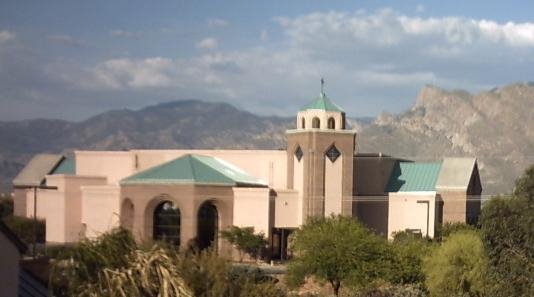
St. Elizabeth Ann Seton Church - Tucson, AZ
Early in the morning on the first day of the week, while it was still dark, Mary Magdalene came to the tomb. She saw that the stone had been moved away, so she ran off to Simon Peter and the other disciple (the one Jesus loved) and told them, "The Lord has been taken from the tomb! We don't know where they have put him!" At that, Peter and the other disciple started out on their way toward the tomb. They were running side by side, but then the other disciple outran Peter and reached the tomb first. He did not enter but bent down to peer in and saw the wrappings lying on the ground. Presently, Simon Peter came along behind him and entered the tomb. He observed the wrappings on the ground and saw the piece of cloth which had covered the head not lying with the wrappings, but rolled up in place by itself. Then the disciple who had arrived first at the tomb went in. He saw and believed. (Remember as yet they did not understand the Scripture that Jesus had to rise from the dead.) With this, the disciples went back home.

Mission in the Sun - DeGrazia Museum, Tucson, AZ
Meanwhile Mary stood weeping beside the tomb. Even as she wept, she stopped to peer inside, and there she saw two angles in dazzling robes. One was seated at the head and the other at the foot of the place where Jesus' body had lain.
"Woman," they asked her, "why are you weeping?" She answered them, "Because the Lord has been taken away, and I do not know where they have put him." She had no sooner said this than she turned around and caught sight of Jesus standing there. But she did not know him. "Woman," he asked her, "why are you weeping? Who is it you are looking for?" She supposed he was the gardener, so she said, "Sir, if you are the one who carried him off, tell me where you have laid him and I will take him away." Jesus said to her, "Mary!"She turned to him and said (in Hebrew), "Rabbouni!" (meaning "Teacher").
Jesus then said: "Do not cling to me, for I have not yet ascended to the Father. Rather, go to my brothers and tell them "I am ascending to my Father and your Father, to my God and your God!"
Mary Magdalene went to the disciples. "I have seen the Lord!" she announced. Then she reported what he had said to her.
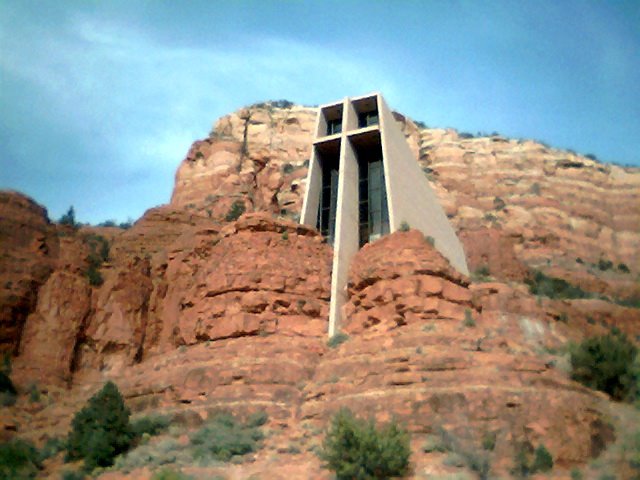
Chapel of the Holy Cross - Sedona, AZ
Saturday, April 15, 2006
Sean & McGillicuddy Trick the Easter Bunny
by Chuck & Victor
by Chuck & Victor
One bright sunny day in Leprechaun Land, Sean, McGillicuddy and Armagh were sitting on the playground talking. "Guess what?" said Armagh "Tomorrow is Easter." "What's Easter?" asked both Sean and McGillicuddy. Since the boys didn't know anything about Easter, Armagh decided that she might pull a little joke on them. "Well," she explained, "Easter is when the Easter Bunny comes hopping around Leprechaun Land with his basket of Easter eggs. If you want to get some Easter eggs, you have to set up a trap to catch the Easter Bunny."
Sean and McGillicuddy thought for a moment. "We should start now if we want to get Easter eggs." McGillicuddy declared. He and Sean said goodbye to Armagh and left.
"Those goof balls crack me up," Armagh said laughing to herself, " everyone knows there's no such thing as the Easter Bunny."
Later that night, Sean and McGillicuddy had finished their trap. They tied a rope to a tree and tied the other end to a net on the ground that was covered by leaves. They placed a carrot in the center of the trap. Soon after they fell asleep, they woke up to hear a hopping sound outside. They both snuck out of their houses and darted behind a tree so the Easter Bunny wouldn't see them.
The Easter Bunny saw the carrot, and looked down at his growling stomach. "All this Easter business is making me hungry," he said to himself," I think I can take a break to enjoy a little snack." He hopped over to grab the carrot. Suddenly, the net gave way under his feet and he soon found himself trapped, dangling above the ground.
Sean and McGillicuddy jumped out from their hiding place and started celebrating. "We caught him! We caught him!" they sang out loud.
It just so happened that the Leprechaun King was out for his nightly stroll. He saw Sean and McGillicuddy dancing around something caught in a net above the ground. He decided to get to the bottom of this. "Sean, McGillicuddy! What are you two doing outside past your bedtimes? And what is trapped in that net?" He peered inside. "Why is the Easter Bunny caught in this net? You lads have some serious explaining to do!" Sean and McGillicuddy explained that Armagh had told them to trap the Easter Bunny in order to get eggs for Easter. "Well, this is very serious," the Leprechaun King said," I'll explain this to the Fairy Queen so she can take care of Armagh. As for you two," he pointed to Sean and McGillicuddy," You will assist the Easter Bunny and help him hide eggs tonight, and you will do it as rabbits yourselves." With his great leprechaun magic, the King turned Sean and McGillicuddy into little bunnies.
Then they went out into the night to help the Easter Bunny deliver eggs. When they were done, the spell wore off and they became leprechauns again. They went back to their houses and went to bed just as the sun was starting to rise. Several minutes later, Sean and McGillicudy's parents walked into their rooms to wake them up for church. The parents were unaware of the events that happened the night before. They couldn't figure out why Sean and McGillicuddy were so tired. The parents decided that both boys weren't getting enough sleep, so they made their bedtimes earlier.
When the Fairy Queen was informed about Armagh, she decided that Armagh's punishment would be to help the Easter Bunny make chocolate eggs and other treats for the following Easter. Armagh was dumbfounded at the fact that the Easter Bunny was real.
As for Sean and McGillicuddy, they had learned their lesson and were going to be good little leprechauns from that time on and not listen to deceptive little fairies like Armagh.
Copyright (c) 2006 by Charles Nugent
All rights reserved. No part of this material may be reproduced, in any media, without the express written consent of the copyright holder.
Sean and McGillicuddy thought for a moment. "We should start now if we want to get Easter eggs." McGillicuddy declared. He and Sean said goodbye to Armagh and left.
"Those goof balls crack me up," Armagh said laughing to herself, " everyone knows there's no such thing as the Easter Bunny."
Later that night, Sean and McGillicuddy had finished their trap. They tied a rope to a tree and tied the other end to a net on the ground that was covered by leaves. They placed a carrot in the center of the trap. Soon after they fell asleep, they woke up to hear a hopping sound outside. They both snuck out of their houses and darted behind a tree so the Easter Bunny wouldn't see them.
The Easter Bunny saw the carrot, and looked down at his growling stomach. "All this Easter business is making me hungry," he said to himself," I think I can take a break to enjoy a little snack." He hopped over to grab the carrot. Suddenly, the net gave way under his feet and he soon found himself trapped, dangling above the ground.
Sean and McGillicuddy jumped out from their hiding place and started celebrating. "We caught him! We caught him!" they sang out loud.
It just so happened that the Leprechaun King was out for his nightly stroll. He saw Sean and McGillicuddy dancing around something caught in a net above the ground. He decided to get to the bottom of this. "Sean, McGillicuddy! What are you two doing outside past your bedtimes? And what is trapped in that net?" He peered inside. "Why is the Easter Bunny caught in this net? You lads have some serious explaining to do!" Sean and McGillicuddy explained that Armagh had told them to trap the Easter Bunny in order to get eggs for Easter. "Well, this is very serious," the Leprechaun King said," I'll explain this to the Fairy Queen so she can take care of Armagh. As for you two," he pointed to Sean and McGillicuddy," You will assist the Easter Bunny and help him hide eggs tonight, and you will do it as rabbits yourselves." With his great leprechaun magic, the King turned Sean and McGillicuddy into little bunnies.
Then they went out into the night to help the Easter Bunny deliver eggs. When they were done, the spell wore off and they became leprechauns again. They went back to their houses and went to bed just as the sun was starting to rise. Several minutes later, Sean and McGillicudy's parents walked into their rooms to wake them up for church. The parents were unaware of the events that happened the night before. They couldn't figure out why Sean and McGillicuddy were so tired. The parents decided that both boys weren't getting enough sleep, so they made their bedtimes earlier.
When the Fairy Queen was informed about Armagh, she decided that Armagh's punishment would be to help the Easter Bunny make chocolate eggs and other treats for the following Easter. Armagh was dumbfounded at the fact that the Easter Bunny was real.
As for Sean and McGillicuddy, they had learned their lesson and were going to be good little leprechauns from that time on and not listen to deceptive little fairies like Armagh.
All rights reserved. No part of this material may be reproduced, in any media, without the express written consent of the copyright holder.
Sunday, April 09, 2006
Palm Sunday
by Chuck
by Chuck

Palm Sunday is the sixth Sunday in Lent and the Sunday before Easter. It is celebrated in all major Christian churches - Roman Catholic, Protestant and Orthodox. In popular parlance it is called Palm Sunday because it commemorates the triumphant entry of Jesus into Jerusalem to celebrate the Passover. The Gospels describe how the crowds lined the route, spread palm branches on the road and waved palm leaves in their hands enthusiastically as Jesus rode in on his donkey. Hence, the name Palm Sunday.
However, until 1970 the official name of this day in the Roman Catholic Church was the Second Sunday of the Passion. In 1970 the the Roman Catholic Church changed the official name to Passion Sunday which has caused confusion for those who were used to referring to the fifth Sunday in Lent as Passion Sunday (that Sunday is now officially called the fifth Sunday of Lent). But, for the average Christian, Catholic and non-Catholic alike, this day is still known as Palm Sunday.
In addition to palm trees being common in the Mediterranean world and its leaves a logical material to cover a dusty road, palm leaves were also a symbol of victory and triumph in the ancient world. The cheering crowds along the road gave evidence to the effectiveness of Jesus' message and the large following he had attracted. It is no wonder that the religious and political establishment were concerned about his popularity and the potential threat to their earthly power that it represented. However, Jesus' kingdom was not of this earth and he was not seeking earthly power. While his followers hailed his entry into Jerusalem with palm leaves which symbolized triumph and victory, Jesus himself elected to be borne on the back of a humble donkey rather than a horse. The horse is a powerful animal that was used in war. The horse represented conquest and power. Throughout history horses were the preferred means of travel for the rich and powerful. The donkey, however, is puny compared to the horse and is a simple beast of burden used by the common masses. As Christ repeatedly stated, his kingdom was not of this world but rather that of heaven. He urged his followers to focus on and prepare for eternal life in heaven, not political change on earth.
The memory of Christ's triumphant entry into Jerusalem just before his crucifixion was kept alive and celebrated from the earliest days by the Church in Jerusalem. The celebration included re-enactments of the Lord's triumphant entry into Jerusalem and the the waving of palms. The custom gradually spread to other churches in the eastern Mediterranean, reaching Constantinople (modern day Istanbul, Turkey), capital of the Roman Empire in the east, by the fifth century. In time the celebration spread throughout the Church and was retained by many Protestant churches following the Reformation. In areas where palms were not available, people used branches from local trees that bloomed in the spring. Today, modern transportation enables churches throughout the world to easily obtain and distribute palms on this day.
In many Orthodox Churches Palm Sunday is referred to as Entry into Jerusalem. Due to the fact that for religious purposes many of these churches use the Julian rather than the Gregorian calendar, this date, like that of other religious holidays is usually a week or more later than their counterparts in the Western Christianity. However, just like western churches, Entry into Jerusalem or Palm Sunday is celebrated with the distribution of palms or branches from local trees and marks the beginning of Holy Week. These churches also celebrate the day before Palm Sunday as Lazarus Saturday where they commemorate the raising of Lazarus from the dead by Jesus. On Lazarus Saturday many of the faithful spend time weaving the palms into crosses for distribution the next day. This custom weaving of palms into crosses can also be found in many Protestant Churches and, if one looks around a Catholic Church they will see that many of their fellow participants in the mass have woven the palm branch they received upon entering the church into a cross.
In Roman Catholic Churches in America palm leaves are distributed to the congregation as they enter the church. There are two Gospel readings on this, Passion (Palm) Sunday with the first being read at the start of the Mass. The congregation then holds up their palm leaves and the priest blesses them. Following the Epistle, the Passion Story from the Gospel according to St. Matthew is read. This is a long reading (Matthew 26:14 – 27:66) with sections divided among three or four readers and parts for the congregation. We again hear the story of Jesus' betrayal, capture, trial, torture, crucifixion, death and burial. The congregation takes the palm leaves home where they are kept as a reminder of the Gospel message of the passion. The palms are collected by the Church just before the beginning of Lent and burned to produce the ashes used on Ash Wednesday.
Subscribe to:
Posts (Atom)

 Posts
Posts


